The Rhetoric of Science
Since the start of this course — The Rhetoric of Science — in January 2025, the scientific and educational communities have undergone profound changes.
Traditionally, the rhetoric of science looks at how scientific knowledge is communicated and made convincing to different audiences — how the way we talk about science can shape what people believe, question, or support. Understanding the appeal to audience — knowing who you’re speaking to and how to reach them — became more important than ever as we realized just how much the outside world was pressing in on the conversations we were having in class.
With the rise of new laws, intensifying controversies, and growing disruption across politics and media — much of it rooted in the aftermath of Trump’s inauguration and the shifting cultural landscape — we found ourselves needing to take urgent action in the structure and spirit of our course.
What once might have been a more traditional exploration of the rhetoric of science has now evolved into a space of critical conversation, raw honesty, and open questioning. Over the past few months, we have engaged in meaningful discussions about how rapidly our futures — all of our futures — are unfolding and changing before our eyes.
This class is unique. We are a small group of 11 students, spanning majors from education to biology, legal studies to political science, and, as we’ve come to call them, “two finance bros.” When we began this course, we had little idea how much our diverse perspectives — and the urgent context of the world outside — would come to shape our learning experience.
Lead by Professor Jennifer Campbell, we have become a true reflection of Gen-Z: students facing unprecedented levels of political polarization, scientific skepticism, educational reform, and a future filled with both anxiety and hope. In a time when trust in science is questioned, and education itself becomes a battleground, we use our growing rhetorical knowledge to navigate, analyze, and advocate for a world that demands both critical thinking and compassionate action.
This course has become not just about scientific communication, but about learning how to be citizens in a shifting world — finding our voices, even when the future feels uncertain.
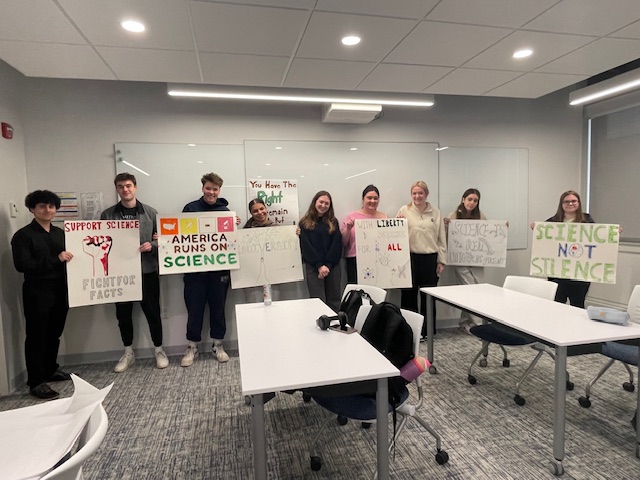
In March 2025, our class created protest posters for the “Stand Up for Science” rally at the Rhode Island State House in Providence. While we didn’t attend as a group, our professor, Dr. Jennifer Campbell, brought our posters to the event, where hundreds rallied against political threats to scientific research and funding. This project reflected the heart of our WTNG 310 class, using rhetoric to defend science in the real world. It showed how we, as students from all different majors, could use our voices to stand up against censorship and advocate for the future of research.
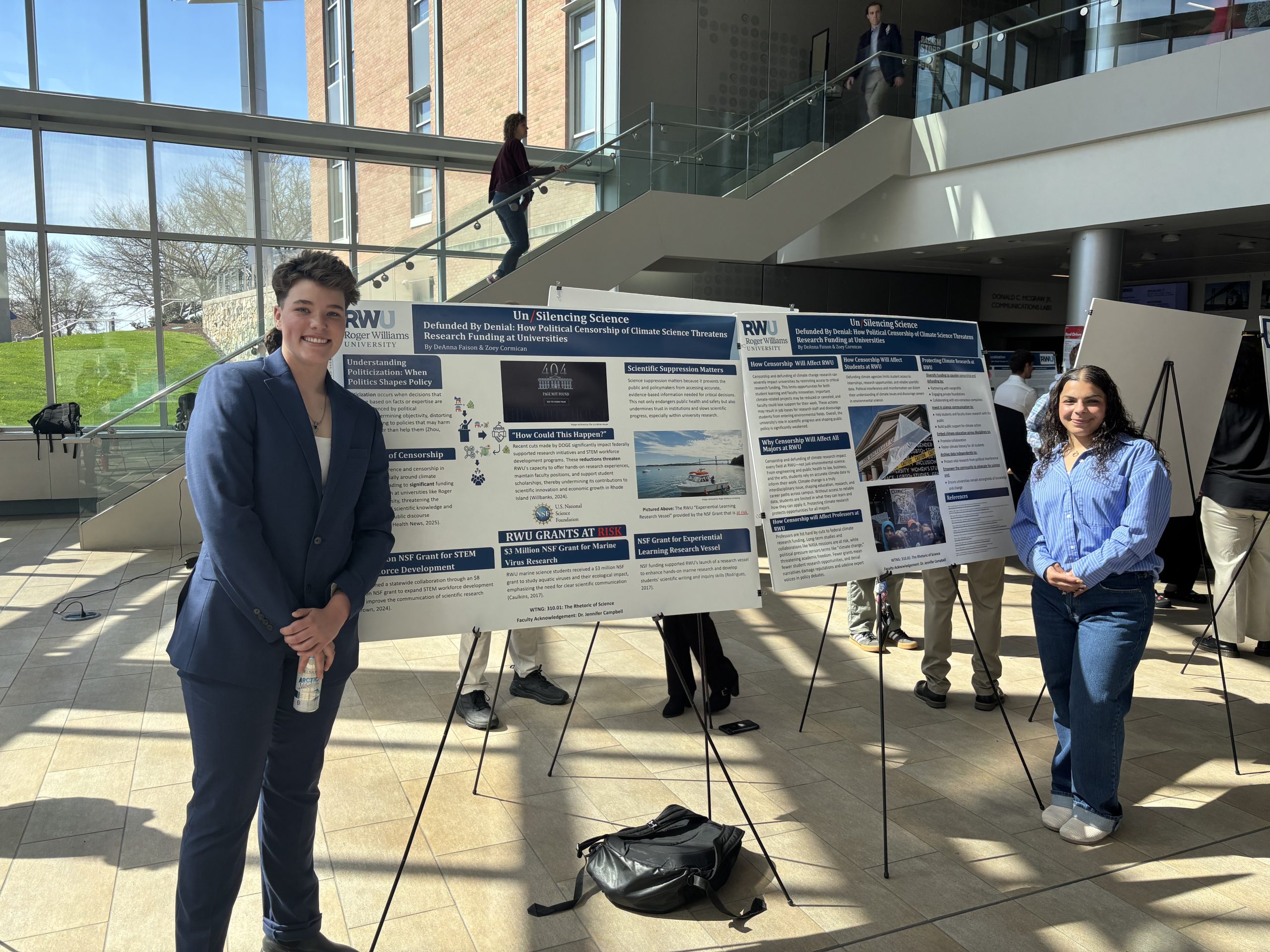
At SASH 2025, Zoey Cormican and DeAnna Faison shared “Un-Silencing Science: Defunded By Denial,” a project showing how political censorship of climate change research is threatening university funding, including at RWU. Their work highlights how science suppression affects students, professors, and the future of research—and why protecting scientific integrity matters now more than ever.